

FSSC 22000 Certification is Simplified with Icicle’s Food Manufacturing Software
FSSC 22000 Certification is a must-have for food manufacturers targeting major retail contracts. If you run a food manufacturing business, you know the pressure comes from all sides. Regulators demand strict food safety. Retailers want to see recognized certifications. Customers are asking for more transparency than ever. Meanwhile, your team still has to keep production running smoothly every day. For many growing companies, FSSC 22000 is the key that opens doors to new business opportunities.
Major retailers and food brands worldwide recognize FSSC 22000 as a trusted food safety standard. Yet many organizations struggle with certification because critical records and compliance activities are scattered across multiple systems. By digitizing food safety processes, manufacturers can improve traceability, simplify documentation, and stay audit-ready year-round. Icicle helps food manufacturers centralize compliance activities and build a more efficient, scalable approach to food safety management.
What Is FSSC 22000 Certification?
The FSSC 22000 Certification Scheme provides a structured framework for managing food safety risks and demonstrating compliance with globally recognized standards. Recognized by the Global Food Safety Initiative (GFSI), it is one of the most widely accepted food safety certification for food manufacturers.
It’s made up of three parts:
- ISO 22000 food safety management requirements
- sector-specific prerequisite programs
- additional FSSC requirements for emerging food safety risks
Unlike certifications that focus on ticking off checklists, FSSC 22000 asks companies to build real management systems. You’re expected to put systems in place that help you spot hazards, control risks, check your progress, and keep improving as you go. If you’ve worked with ISO standards before, FSSC 22000 will probably feel pretty familiar.

Why Food Manufacturers Pursue FSSC 22000 Certification?
For most food manufacturers, FSSC 22000 certification is more than a compliance requirement. It is a strategic investment in growth, market access, and operational excellence.
Access More Markets
Many major retailers, distributors, and food service companies require suppliers to hold a GFSI-recognized certification before they can be approved. FSSC 22000 helps organizations meet these requirements and qualify for new business opportunities in domestic and international markets.
Build Buyer Confidence
Third-party certification provides independent verification that an organization’s food safety management system meets internationally recognized standards. This assurance can strengthen customer relationships, support supplier approval processes, and build trust with prospective buyers.
Improve Risk Management
FSSC 22000 encourages organizations to take a proactive approach to food safety by identifying and controlling risks throughout their operations and supply chains. In addition to traditional food safety hazards, the standard addresses emerging risks such as food fraud, food defense, and supply chain vulnerabilities.
Align with Global Standards
Because FSSC 22000 is based on ISO management system principles, it integrates well with other compliance and quality programs. This alignment can simplify governance and create greater consistency across business operations.
Strengthen Operational Performance
Implementing FSSC 22000 often reveals process gaps, inefficiencies, and opportunities for improvement. As organizations build and maintain their food safety management systems, they frequently gain better visibility, stronger accountability, and more effective operational controls.

Why FSSC 22000 Certification Can Feel Overwhelming
While the benefits of FSSC 22000 certification are substantial, many organizations find implementation challenging. Common obstacles include managing food safety records manually, tracking corrective actions consistently, maintaining supplier approval documentation, ensuring effective allergen controls, and achieving end-to-end traceability. Organizations may also struggle with disconnected sanitation records, limited recall readiness, and audit preparation processes that consume significant time and resources.
In many cases, the challenge is not a lack of commitment to food safety but a lack of centralized information. When records, documents, and compliance activities are spread across multiple systems, maintaining certification requirements becomes more complex, time-consuming, and difficult to manage effectively.
Steps to FSSC 22000 Certification
1. Understand the Certification Scope
Before implementing FSSC 22000, organizations should clearly define the scope of certification. This includes identifying the applicable ISO 22000 requirements, determining the prerequisite programs relevant to the operation, understanding additional FSSC requirements, and correctly classifying the business within the appropriate supply chain category. Establishing a clear scope from the outset helps ensure resources are focused on the right requirements and reduces the risk of costly rework later in the certification process.
2. Build Your Food Safety Management System
A food safety management system must be more than a collection of documented procedures—it must be fully implemented and integrated into daily operations. Organizations are required to establish processes for hazard analysis, critical control point (CCP) monitoring, verification activities, corrective actions, document control, internal communication, and management review. Throughout the certification process, auditors will look for objective evidence that these systems are consistently followed in practice and effectively support food safety performance.
3. Implement Sector-Specific Prerequisite Programs
Prerequisite Programs establish the foundational conditions needed to produce safe food and maintain a hygienic operating environment. Depending on your industry sector, these programs may cover sanitation controls, pest management, equipment maintenance, waste handling, personnel hygiene, supplier controls, and storage practices. FSSC 22000 requires organizations to implement the prerequisite programs that apply to their specific operations, whether they are food manufacturers, packaging producers, storage facilities, or transportation providers.
4. Address Additional FSSC Requirements
This stage often requires the most preparation because FSSC 22000 goes beyond traditional food safety controls. Organizations must develop documented programs for food defense, food fraud prevention, allergen management, labeling control, supplier oversight, and equipment management. These areas require formal policies, risk assessments, and procedures that demonstrate a proactive approach to managing food safety risks.
5. Conduct Internal Audits
Internal audits help you evaluate whether your food safety management system is working as intended before the certification audit begins. They provide an opportunity to identify gaps, verify that procedures are being followed consistently, and confirm that records and documentation are complete. By addressing issues early and implementing corrective actions, organizations can reduce audit findings, strengthen compliance, and approach the certification process with greater confidence.
6. Select an Accredited Certification Body
Choosing the right certification body can make the certification process smoother and more efficient. When evaluating potential certifiers, consider their experience in your industry, audit timelines, location, costs, and availability. Selecting a certification body that understands your sector can help ensure a more productive audit experience and clearer guidance throughout the certification process.
7. Complete Stage 1 and Stage 2 Audits
The certification process consists of two audit stages. During the Stage 1 audit, the certification body reviews your food safety management system, documentation, and readiness for certification. The Stage 2 audit takes place on-site, where auditors assess how effectively your processes are implemented in practice, interview employees, and review records to verify compliance. Organizations must be prepared to demonstrate that their documented procedures are consistently followed and supported by objective evidence.
8. Maintain Certification
Achieving certification is only the beginning. To maintain FSSC 22000 certification, organizations must continuously monitor and improve their food safety management systems through regular surveillance audits, management reviews, record retention, and corrective action follow-up. Maintaining certification requires an ongoing commitment to compliance, operational discipline, and continuous improvement to ensure food safety standards remain effective over time.
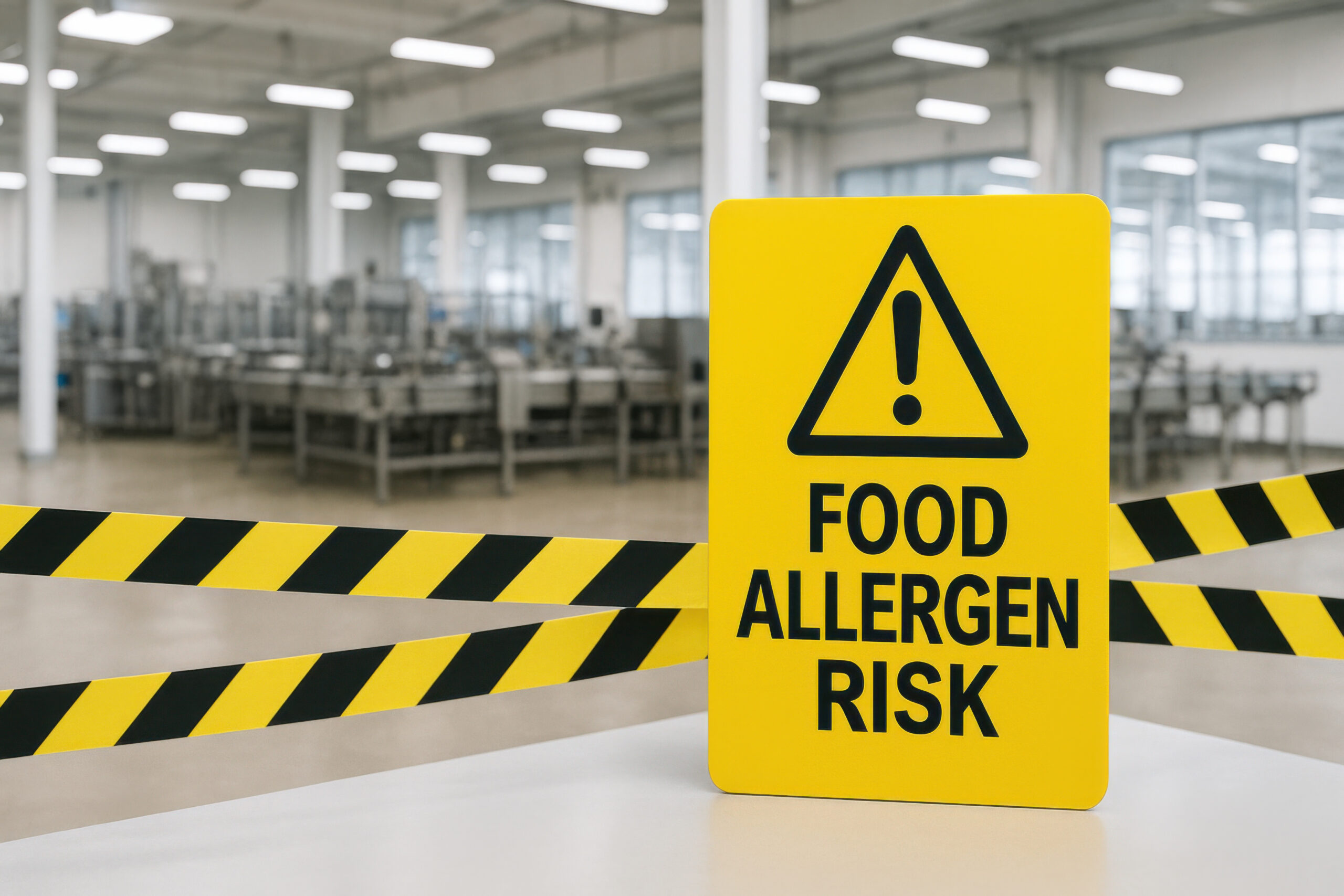
Staying Safe: Food Defense, Food Fraud, and Allergen Management
FSSC 22000 places significant emphasis on risks that extend beyond traditional HACCP programs. In addition to controlling food safety hazards, organizations must proactively address intentional threats, supply chain vulnerabilities, and allergen risks.
Food Defense
Food defense focuses on protecting products from intentional contamination or tampering. Organizations must assess potential vulnerabilities within their facilities and operations, including physical security, access controls, and critical process points. Based on this assessment, they must implement documented measures to prevent and mitigate potential threats.
Food Fraud
Food fraud involves the intentional substitution, dilution, misrepresentation, or adulteration of food products for economic gain. FSSC 22000 requires organizations to conduct food fraud vulnerability assessments and implement controls to reduce identified risks. These measures help protect product integrity, brand reputation, and consumer trust.
Allergen Management
Effective allergen management is essential for protecting consumers and maintaining regulatory compliance. Organizations must establish controls for ingredient segregation, production scheduling, cleaning validation, label accuracy, and employee training. These measures help prevent cross-contact, reduce labeling errors, and ensure consumers receive accurate information about potential allergens.
Together, these requirements strengthen supply chain integrity, reduce risk, and demonstrate an organization’s commitment to producing safe, authentic, and properly labeled food products.

How Icicle Supports FSSC 22000 Certification
Digital systems do not replace food safety programs. But they can make running those programs a whole lot easier. You’ll need to keep records that are clear, easy to find, and always up to date. Connecting your systems makes this a whole lot easier.
Food Safety Management System Support
Icicle helps you get all your documentation, workflows, and compliance records in one place. No more juggling spreadsheets and paper logs, your team can work in one system that keeps things consistent. That means less duplicated effort and clearer oversight for your team.
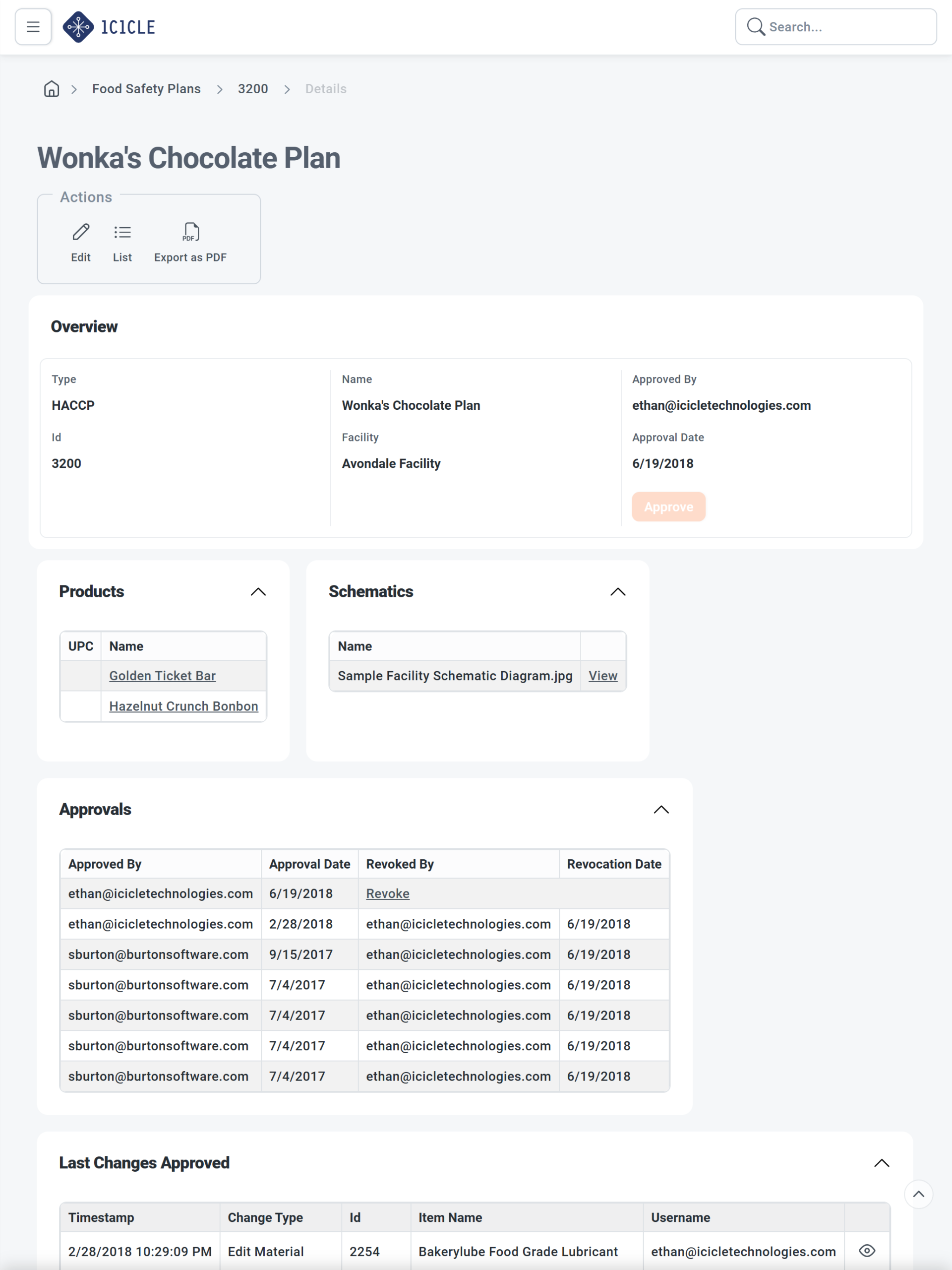
Prerequisite Program Management
It’s much easier to manage cleaning schedules, maintenance, inspections, and day-to-day checks when everything’s in one spot. That makes it easier to show auditors that your processes are consistent.
Food Fraud and Food Defense Workflows
Risk assessments, supplier oversight, and supporting documentation are easier to organize when processes are standardized. No more chasing scattered records, your team can actually see what’s going on.
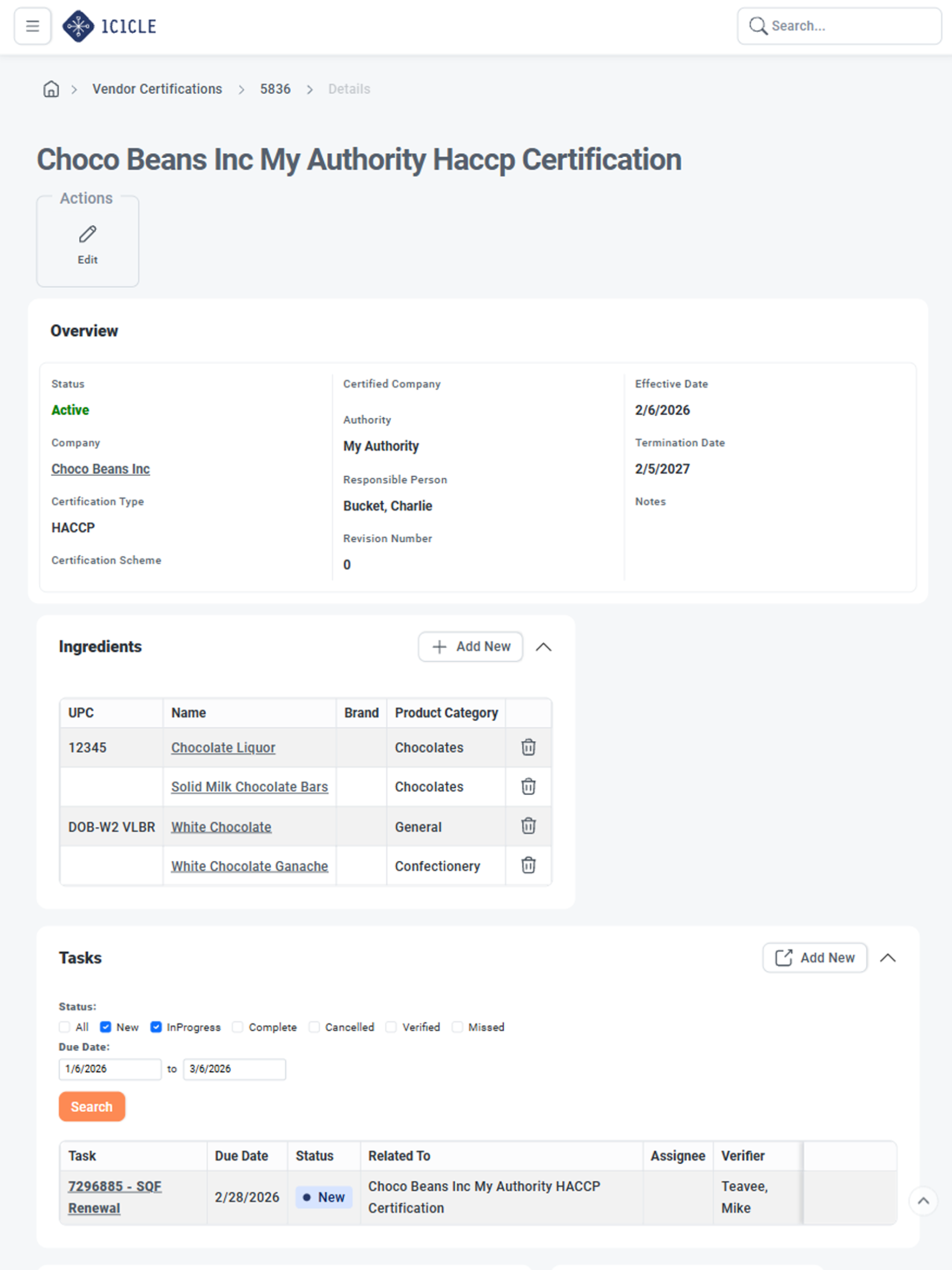
Allergen and Labeling Control
Allergen management means you have to be really careful, no room for mistakes. You need to stay on top of production controls, ingredient lists, supplier details, and make sure all your documents are right. When your systems are connected, there’s less chance for things to slip through the cracks.
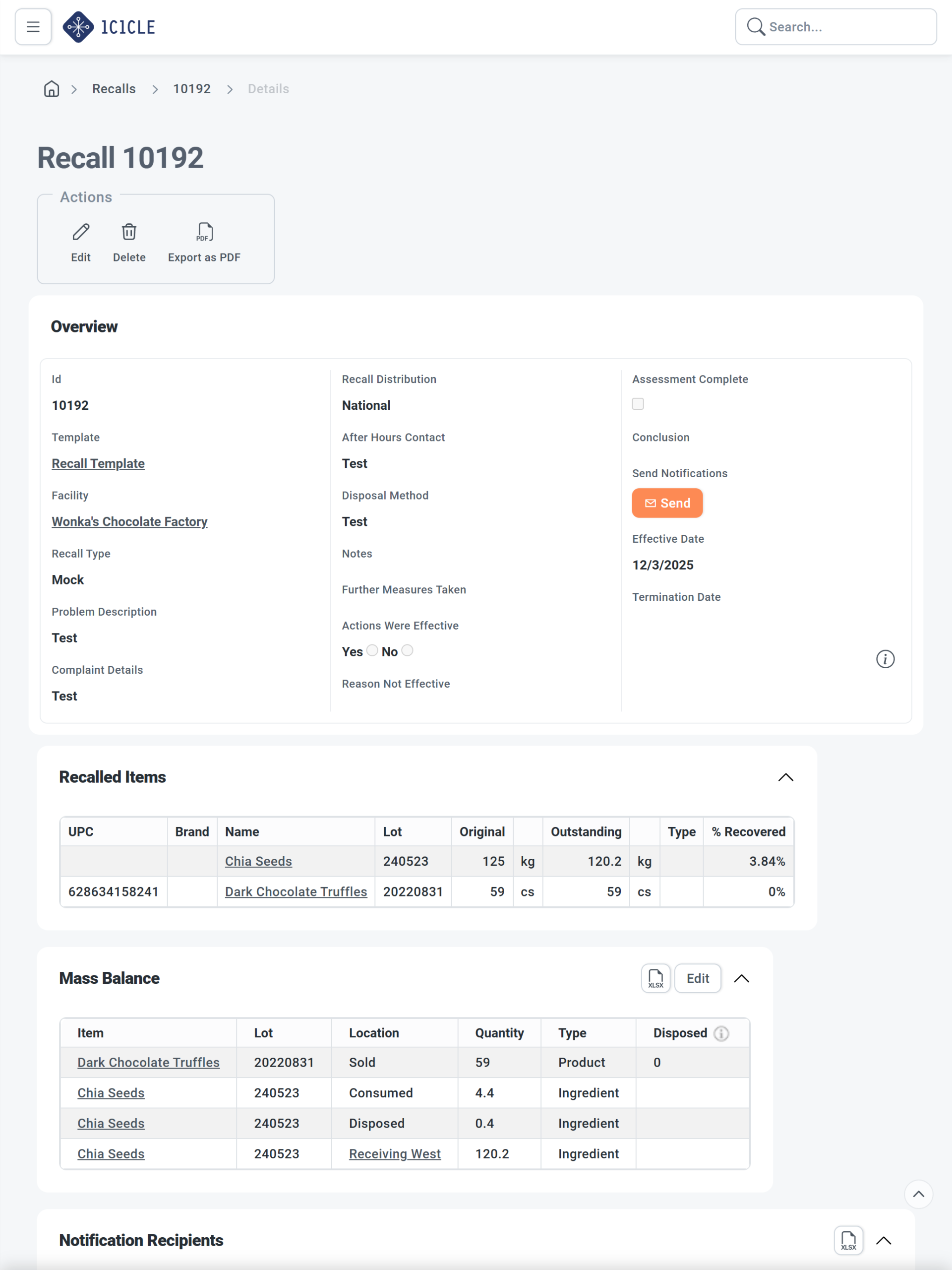
Traceability and Recall Readiness
Traceability, knowing where everything came from and where it went, can be one of the biggest headaches during audits or recalls. If you can quickly pull up ingredient, batch, and lot data, you can respond much faster if there’s ever a recall. If you’re tracking things by hand, delays can really put you at risk.
Alerts and Corrective Actions for FSSC 22000 Certification
You can spot compliance issues and fix them faster when everyone knows their role and problems don’t fall through the cracks. That way, your team can jump on issues right away, instead of finding out about them after the fact.
Incident Management
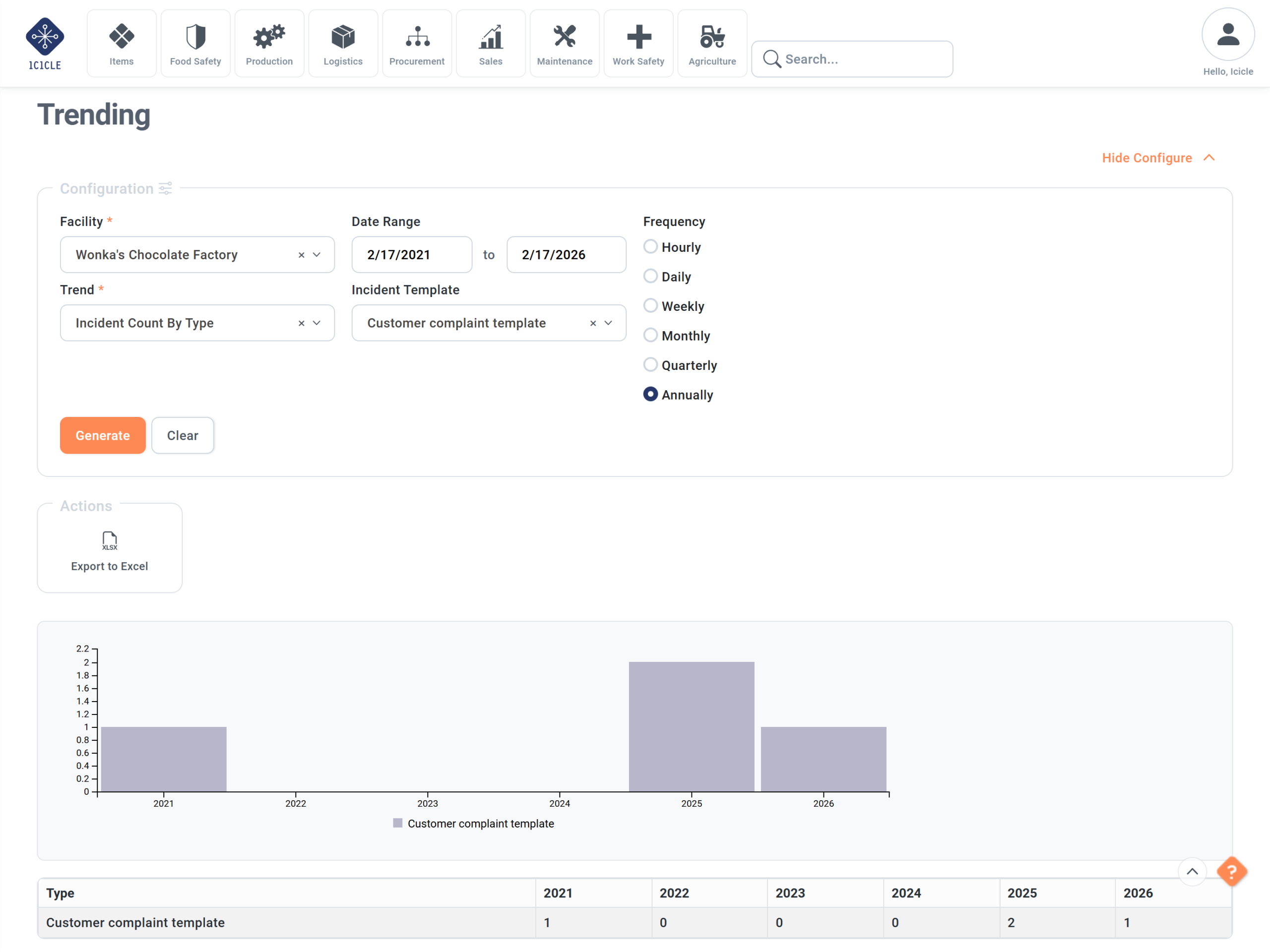
When something goes wrong, you’ll need to document it, figure out what happened, fix it, and check that it really got better. Having everything organized in one place keeps your processes consistent and easy to follow.
Remote Audit Support
When documents are digital, getting ready for audits becomes simpler and less disruptive to daily work.

The Bottom Line: FSSC 22000 Certification with Icicle
Getting FSSC 22000 certified can be a true game-changer for your business. It helps you build buyer trust, stay on top of food safety, manage risks better, and unlock bigger business opportunities. But getting and keeping certified is much tougher if you’re still relying on scattered paperwork and manual systems. The goal is not simply passing an audit. It’s about building a better, stronger business for the long haul. Icicle helps food manufacturers cut down on admin headaches, boost traceability, and make audits less stressful, so you can focus on growing your business. If your team is preparing for certification or looking to simplify continuous compliance management, it may be time to modernize the systems behind your food safety program.
Ready to unlock new markets? Request a demo of Icicle today and check out our Case Studies to see how other food manufacturers have achieved certification with confidence.
For more insights into food safety certification, explore our guides to SQF certification, BRCGS certification, and CanadaGAP certification .
Frequently Asked Questions: FSSC 22000 Certification
What is the difference between FSSC 22000 and SQF or BRCGS?
All three are recognized by GFSI, but they’re set up a bit differently. FSSC 22000 is based on ISO’s system approach, while SQF and BRCGS are more about following set rules during audits. Which one works best really depends on what your customers want and how your business runs.
How long does FSSC 22000 certification take?
How long it takes really depends on how ready your company already is. If you’re starting from zero, it might take a few months to get everything set up. If you already have a good food safety program, you can usually move through certification much quicker.
Is FSSC 22000 required for food manufacturers?
Most places don’t require FSSC 22000 by law. But a lot of buyers won’t even consider you unless you have a recognized food safety certificate.
Does FSSC 22000 include food fraud requirements?
Yes, it does. You’ll need to assess your risks around food fraud and have a plan to prevent it, that’s part of the requirements.
How does software help with certification?
Software can help you keep your records organized, make traceability easier, keep your docs consistent, and cut down on paperwork headaches. It won’t make you an expert, but it definitely makes the whole compliance process less overwhelming.