
Article
Preparing for BRCGS Certification with the Icicle Production Management Platform
Whether your company is just beginning or needs a better solution to earn and maintain BRCGS certification, Icicle helps you through each…
Learn More
Don’t manage traceability records. Generate them automatically.
FSMA 204 requires fast, accurate access to CTEs (Critical Tracking Events) and KDEs (Key Data Elements)—not reconstructed spreadsheets or forms to fill out.
Icicle captures what’s actually happening in your operation—lot movements, production runs, transformations, and shipments—and builds compliant traceability records in the background. It’s software that reduces recall risk and manual work, and it integrates with how your plant really runs.
So instead of preparing for traceability requests, you’re already ready.
Disconnected systems drive manual work, inflate audit prep by ~40–50%, and expose manufacturers to recalls costing
per incident
Faster, targeted recalls and audit readiness reduce recall scope and audit labor, cutting exposure and prep time by
Eliminates duplicate entry and spreadsheet reconciliation, saving
of QA, ops, and IT labour hours tied to data cleanup
Standardized integrations and role-based access reduce security and audit scope, lowering compliance review and integration maintenance costs by
You’re not just managing compliance. You’re managing incoming ingredients, production runs, inventory movement, shipments, and customer expectations.
Icicle connects traceability directly to that activity—so it becomes part of how you run the plant, not something your team reconstructs later.


FSMA-Specific Features
Most systems treat FSMA 204 as a recordkeeping problem.
They help you store traceability data—but your team still has to reconstruct what happened during production.
Icicle takes a different approach.
It captures real operational activity and generates traceability records automatically for FSMA 204 compliance, so your data reflects what actually happened, not what was entered later.
Capture
Icicle supports digital CTE/KDE traceability to help your team capture the records behind receiving, transformation, shipping, and product movement. Your traceability records are built from operational events already occurring in the plant, saving time and improving data accuracy.
Connected lots
Traceability only works when it reflects how your operation actually runs. Our integrated software connects lot-level tracking to production activity, including how ingredients and materials move through processing into finished products. Ensure your records stay aligned with real plant activity.
Recall readiness
Icicle supports mock recall simulations and recall execution across products, ingredients, materials, and packaging. Plus, we built in regulator-ready exports and mass balance tools that help you respond faster and with greater confidence. When something needs to be traced back fast, your team can’t afford guesswork.
Retrieval
FSMA 204 raises the stakes on record access. Be ready with Icicle, giving your team a more structured way to manage traceability records. Find what you need faster during audits, investigations, customer requests, and urgent trace-back situations. For busy decision-makers, that means less time pulling records under pressure, less operational disruption during investigations, and lower risk when response speed matters most.
Icicle Ensures Traceability That Keeps Up with Production
When traceability records are generated directly from real-time operational activity—rather than manually compiled—your system inherently supports the capture, linkage, and maintenance of Critical Tracking Events (CTEs) and Key Data Elements (KDEs) as required under FSMA 204.
This shifts compliance from periodic record assembly to continuous, execution-based recordkeeping, where traceability data remains accurate, complete, and aligned with actual product movement, transformation, and handling across your operations.
What changes with this approach
Model products, ingredients, packaging, and lot structures based on how your plant actually runs. This improves adoption, reduces workarounds, and helps your team maintain traceability.
Ensure your traceability records reflect actual flow by tracking materials and finished goods across real production and logistics processes.
Bring traceability, inventory, barcode data, and compliance records into one system. This lets you create stronger data integrity and reduce the time spent chasing information.
Access the exact records you need during recalls, audits, or regulatory requests, meaning faster responses and better control over the business impact of urgent events.
This isn’t a dramatic system overhaul. It’s a shift in how compliance is handled—one that reduces friction, improves accuracy, and strengthens control over time. The result is less audit stress, stronger traceability, and more time focused on running production.
You don’t need another traceability tool.
You need a production management platform that connects traceability to production.
Real results from food manufacturers who replaced disconnected systems with a single compliance infrastructure. With Icicle, there’s less audit stress, fewer recalls, and more time on production.
Paul Tolnai — Operation Manager
“With Icicle, the auditor could view most of the documents remotely and show up for a few final daily checks — out the door in ten minutes. Inspection times reduced by an astonishing 88%.”
P&S Frozen Foods
Chris Lerohl — CEO
“Without it, we couldn't be selling to Sobeys or across the provincial border to British Columbia. The return on investment for us — I would rather say it's essential.”
Honest Dumplings
Dave Maguire — HACCP Coordinator
“It's affordable to implement and easy to learn. It really simplifies our ability to do things consistently. Auditors give us nothing but wonderful compliments — everything is organized, one click and they see everything.”
Hayter's Farm
Get insights from our helpful articles about food manufacturing, traceability, and regulatory compliance.
Whether your company is just beginning or needs a better solution to earn and maintain BRCGS certification, Icicle helps you through each…
Learn More
Food Engineering magazine recently featured insights from Icicle Technologies founder and CEO, Steven Burton, in their article “Food Safety & Quality Management:…
Learn More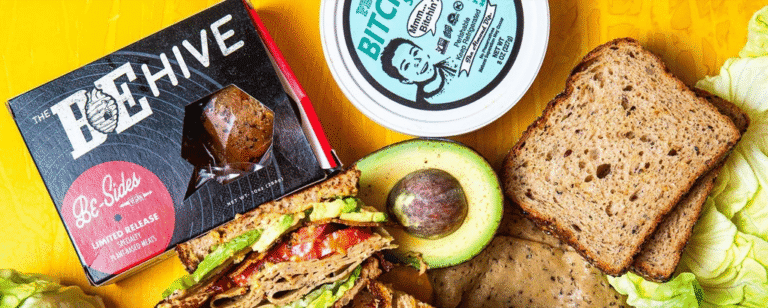
When manual temperature checks were eating up precious production time, The BE-Hive found a smart solution for their busy vegan food production…
Learn MoreAre you ready to make compliance your competitive advantage? See how Icicle helps food and beverage manufacturers meet FDA, USDA, GFSI, and state regulations—all in one platform. No big-bang implementation. No forced ERP replacement.
Less scrambling. More control. Better production management.
Icicle helps food manufacturers meet FSMA 204, FDA, USDA, GFSI, and state requirements—while improving operational control and costing visibility.
No ERP replacement. No manual reconstruction.
Just traceability built into how your operation runs.
Everything you need to know about how Icicle helps U.S. food and beverage manufacturers reduce regulatory risk, pass audits, and scale without operational disruption.
Icicle helps capture and connect traceability records for receiving, transformation, production, shipping, lot movement, and product handling so teams can maintain the Critical Tracking Events and Key Data Elements required for FSMA 204 readiness.
Traditional systems often store traceability records after the fact. Icicle connects traceability to real operational activity, helping generate records from what is actually happening in production instead of forcing teams to reconstruct the story later.
Yes. Icicle is designed to work alongside existing ERP and operational systems so traceability, compliance, inventory, and production records can be connected without requiring a full ERP replacement.
Because Icicle keeps traceability records connected to operational events, teams can retrieve the records they need faster during FDA requests, audits, investigations, customer requests, and trace-back situations.
Implementation focuses on modeling your products, ingredients, packaging, lots, production activity, transformation steps, and shipment-related records around how your plant actually operates. That makes traceability part of execution rather than a separate reconstruction exercise.
Not as a standalone transportation or fleet management platform. Icicle supports one-step-forward, one-step-back traceability and the documentation needed for traceability continuity, recall readiness, and FDA retrieval requirements. It should be positioned as a system for compliance-focused traceability and record governance, not as a tool for managing fleets of trucks or end-to-end shipment operations without additional integrations.