
Building a Strong Food Safety Culture: Lessons from Industry Leaders
In the wake of recent foodborne illness outbreaks, food safety experts are emphasizing the critical importance of organizational food safety culture in preventing contamination incidents and recalls. The McDonald’s E. coli outbreak serves as a powerful reminder that even the most established companies can face serious food safety challenges.
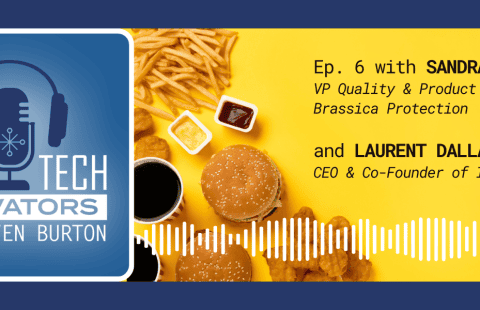
The recent FoodTech Innovators Podcast episode covered the McDonald’s E. coli outbreak, with guests Sandra Lazo, VP of Quality and Product Safety at Brassica Protection Products, and Laurent Dallaire, CEO of Innodal, shedding light on the key food safety culture lessons for all food and beverage businesses.
Food Safety Culture Goes Beyond Basic Protocols
The E. coli outbreak, which sickened over 100 people across 14 US states (with one fatality reported), is a sobering example of the importance of complete food supply chain management to avert major public health incidents like these. While the US FDA and CDC investigation led to McDonald’s restaurants – in particular, their famous Big Mac burger – the source of the incident was traced back to raw, slivered onions that came from Taylor Farms in California.
As Lazo and Dallaire outlined, the risk of E. coli in the food supply chain is unavoidable; the goal of food safety standards is to control those risks, which must be the responsibility of every company and person who interacts with food products from farm to fork. “Many times, you know, a misconception is food safety is only washing hands,” Lazo said, “but it’s more than that. It’s an extreme program from the beginning, the harvesting, from water that it takes in all this process.” In other words, what is needed at every part of the food supply chain is a food safety culture.
Breaking Down Departmental Silos
This comprehensive approach requires commitment at every level of the organization. Lazo pointed out another critical misconception in the industry: that responsibility for food safety is isolated to a few departments. “Food safety encompasses all the departments,” Lazo continued, “It starts from research and development, and goes through the whole operation.” This has been a key lesson of her work as VP of Quality at Brassica, which is developing highly innovative nutritional products that must meet the highest standards from the earliest stages of product design – a more complex task than most food producers face on a regular basis.
Consider the McDonald’s E. coli outbreak example: from water and soil samples at the farm where the onions were grown to testing surfaces in restaurant kitchens, those onions passed through hundreds, if not thousands, of hands. Even with a simple product like onions, each link in the food supply chain requires preventive controls to ensure that the products making it onto consumers’ plates are safe to eat. Lazo underscored the importance of communication between departments – and companies – to facilitate the flow of information that stops contaminated foods from hitting the market.
How to break down data silos for total FSMA traceability compliance >
The Food Safety Training Imperative
One of the most crucial aspects of food safety culture is ongoing training. Lazo emphasized that, “Training is not a checklist where I go and I grab all the company and say, we should wash our hands and we should wash the proper utensils. It involves ongoing training from the people that work in the plant, from supervisors, from management, from the QA team.”
The challenge of maintaining consistent training standards is particularly acute in today’s labor environment. As Lazo points out, the heightened use of temporary workers in the food industry poses a special challenge. “Can you train someone in food safety in 10 minutes, who is a temp for the day? Are companies going to invest in that? I don’t think that’s happening,” she said.
The Investment Perspective to Building a Food Safety Culture
When it comes to managing and controlling food safety risks, Dallaire has seen a huge range of approaches. “We’ve seen two extremes,” he observed. “I’ve seen CEOs putting food safety first and for them it’s very important, and in the same type of business, I see management that considers food safety as an expense, and not an investment.”
This difference in perspective can have serious consequences. As Dallaire noted, “We’ve heard so many times the saying, ‘well I never got a recall so I’ll never get one.’ No, that’s not how it works. With that attitude, you’ll get one, that’s for sure.”
Unlock efficient employee training for food processors >
Learning from Past Food Safety Incidents
The most powerful advocates for food safety often emerge from crisis situations. Dallaire shared an insightful observation: “Most of time, when you have a recall and it’s an extinction level event where a company won’t survive it…people who were working in the company will survive and they will get a new job in the industry. They are the best food safety ambassadors in the whole industry, because they know what it is, they know the impact.”
He cited a specific example of Maple Leaf Foods, which in 2008 was the source of a major listeriosis outbreak that triggered massive recalls. “Right now, Maple Leaf is one of the best ambassadors in terms of food safety, in terms of regulation. They’re clearly a leader now in food safety. There are a lot of people who were in the industry when it happened, who lived that transition, and from there are clearly ambassadors in terms of food safety.”
Data-Driven Decision Making
Building a food safety culture requires rooting institutional changes in practical, proven methods for safety and quality control. The importance of analyzing and learning from data cannot be overstated. Lazo advised: “Look into the data for previous gaps, invest in training and never overlook it…to enhance food safety culture, you need to ask what you can do better. Definitely, we still have gaps in the industry and there is a lot at the agricultural level that can be done.”
Leverage food safety requirements for business success >
Lazo and Dallaire both bring a wealth of expertise to this fascinating topic. Check out the whole episode of the FoodTech Innovators Podcast hosted by Steven Burton, with special guests Lazo and Dallaire, below:
Listen and subscribe to the FoodTech Innovators Podcast on your favourite app: