McDonald’s E. coli Outbreak 2024: Expert Analysis of Food Processing Safety
The recent McDonald’s E. coli outbreak linked to contaminated onions has sent shockwaves through the food processing industry. While media coverage has largely focused on consumer impact, food safety experts are examining deeper implications for processors and manufacturers, particularly regarding supply chain vulnerabilities and prevention strategies.
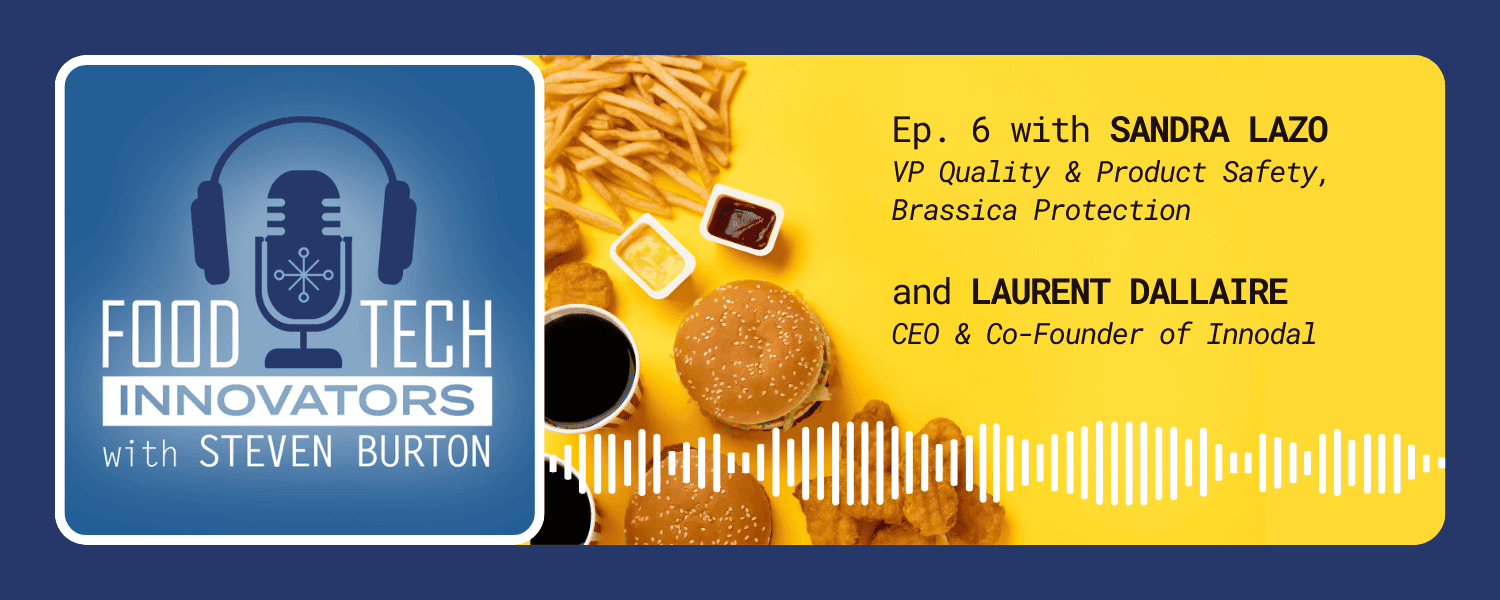
This episode of the FoodTech Innovators Podcast looks into the big picture for the food industry. Host Steven Burton is joined by Sandra Lazo, VP of Quality and Product Safety at Brassica Protection Products, and Laurent Dallaire, CEO of Innodal, to provide insights on how incidents like these occur, how they can be avoided, and what innovations can help food businesses manage risks.
Public Health & Industry Impact of the McDonald’s E. coli Outbreak
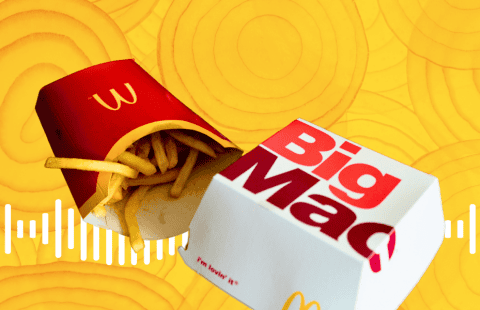
To recap the FDA’s investigation, which wrapped in early December 2024: On October 22, California-based Taylor Farms initiated a voluntary recall of yellow onions after a multi-state outbreak of E. coli O157:H7 infections that were traced back to their farm via McDonald’s restaurants. McDonald’s quickly removed the slivered onions (used on their burgers) from their supply chain, but the scope of foodborne illness outbreak had already grown to 14 states, with 104 infections reported. 99% of patients reported that they had eaten at McDonald’s in the week before they fell ill.
As a result of this E. coli outbreak, one older adult in Colorado died, 34 people were hospitalized, and four people developed a serious condition that can cause kidney failure. E. coli outbreaks are fairly common, typically causing diarrhea and other symptoms like vomiting and fever, but the risks are higher for young children, older adults, and people with compromised immune systems. Since most E. coli cases are mild, the number of people affected is likely higher than the reported cases.
Outbreaks like this one cause panic in the food industry, which spreads quickly. Indeed, Taylor Farms supplied onions to other major restaurant chains like Burger King, which pulled fresh onions from several locations, as did Taco Bell, Pizza Hut, and KFC – even though they didn’t source onions from Taylor Farms. McDonald’s already announced that they are investing $100 million to restore their reputation with consumers.
“It becomes very public when it’s McDonald’s, of course, as consumers we’re all feeling involved at some point in this incident.”
Laurent Dallaire, whose biotech company Innodal develops natural antimicrobial agents to inhibit and protect foods against pathogenic strains like Listeria, E. coli, and Salmonella, noted the complexity of the situation: “It becomes very public when it’s McDonald’s, of course, as consumers we’re all feeling involved at some point in this incident. It’s interesting because in that case, you kind of see the relationship between a restaurant chain or a grocery with their suppliers and a restaurant and the grocery really relying on the supplier to be the one taking care of food safety.”
This incident has highlighted the intricate relationship between major food service chains and their suppliers. As Dallaire observed, “I kind of find it sad that you see Taylor Farms being pointed and being the sole party responsible from this incident. But it’s a hard one because you realize, well, it’s slivered onions. It’s simple as that. And you have a huge recall for E. coli.”
The Challenge of Raw Produce for McDonald’s and Other Food Businesses
“There’s not much you can do on slivered onion…it’s a raw product. It wasn’t cooked, you can’t cook it. There’s no real proper kill step in this case.”
One of the fundamental challenges in this case involves the nature of the product itself. “It’s the simplest of food but it’s the most complicated one in terms of making sure that it’s safe,” Dallaire explained, “because there’s not much you can do on slivered onion…it’s a raw product. It wasn’t cooked, you can’t cook it. There’s no real proper kill step in this case.”
In fact, the investigation into the E. coli outbreak that was conducted by the FDA, CDC, and state agencies, was not able to confirm the presence of the specific pathogen strain at Taylor Farms through product or environmental samples.
Some of the key risk factors in produce processing include:
- Field-level contamination through irrigation water
- Cross-contamination during processing
- Storage and distribution challenges
- Limited intervention options
The massive scale of modern food production creates unique challenges. As Dallaire pointed out, “If you’re using contaminated water to hydrate your fields, your whole field is going to be contaminated and we’re talking about hundreds of thousands of tons of product.”
Sandra Lazo, VP of Quality and Product Safety at Brassica Protection Products, added another dimension to the challenge: “Do we have one distributor of processed onions where the onions process in-house? If the distributor didn’t have proper storage conditions, then that’s also a probability that the contamination would have gone through.”
Testing and Prevention Strategies for Regulatory Compliance
The outbreak, which spread widely through hundreds of McDonald’s fast food restaurants, has raised questions about current testing protocols. Lazo, who manages product safety and quality for an innovative producer of nutritional ingredients derived from cruciferous vegetables (like broccoli, kale, brussel sprouts), emphasized the importance of comprehensive testing. “Are we doing a square root plus one? What kind of sampling are we doing in the produce to ensure that the raw material entering our facilities is good?”
She further explained that the complexity goes beyond simple testing: “Many times, you know, a misconception is food safety is only washing hands. But it’s more than that. It’s an extreme program from the beginning, the harvesting, from water that it takes in all this process.”
Recent regulatory changes may impact future prevention efforts. As Lazo noted, the FDA introduced a new final rule on agricultural water last summer, which will require farmers to conduct hazard-based assessments on pre-harvest agricultural water, with an eye towards the big picture of risks in water distribution systems and water sources.
Looking Forward to the Role of Innovation to Combat E. coli and Other Pathogens
The industry must learn from this incident to prevent future outbreaks. Dallaire emphasized that “It’s really a case of risk management.” There is no way to completely eliminate the risks of foodborne illness; the goal, instead, is to effectively manage that risk. And the most important part of that process is to make sure that contaminated products (with E. coli or any other pathogen) don’t leave the facility and get to the consumer.
As the industry — from individual farms to massive corporations like McDonald’s — grapples with these challenges, new technologies and approaches are being developed. Laurent highlighted the potential of emerging solutions: “Being able to have good analytics in order to be able to involve AI is going to help improve that sampling plan to be sure that we get the problem right at the right spot with reasonable sampling points.”
Check back soon for the next blog installment of this compelling podcast episode, or watch the whole episode now:
The FoodTech Innovators Podcast
On the FoodTech Innovators Podcast, together we explore the transformative impact of technology, and success stories in the world of food and beverage manufacturing.
Each episode covers a specific aspect of innovation and technology adoption within the food and beverage sector, examining its implications for food safety, profitability and sustainability. We are here to inform and inspire you by showcasing the latest innovations and best practices driving positive change in the food industry.
The FoodTech Innovators Podcast is hosted by Steven Burton, founder and CEO of Icicle Technologies. A Vancouver-based software architect with over two decades of experience implementing innovative technologies for businesses, nonprofits, and government institutions, he is the mastermind behind Icicle ERP, an award-winning suite of food production management systems that use the latest tools in process automation and generative AI to unify and optimize manufacturing operations. Built with food safety and traceability at its core, Icicle is a complete solution for smart automation, improving quality standards and production efficiency, and expanding growth opportunities for all types of food businesses.
Subscribe with your favourite podcast app: